How to Get Land Title at the National Land Agency in Jamaica: A Step-by-Step How-To Guide
Owning land in Jamaica is a big deal. It’s often tied to family legacy, investment, or building a home. But without a registered Certificate of Title, your rights can be harder to prove or defend, especially in disputes or when trying to sell, subdivide, or use the land as collateral.
The National Land Agency (NLA) is the government body responsible for land titling in Jamaica. If you have old deeds, have been in long-term possession of family land, or qualify through adverse possession, getting a formal title gives you stronger legal protection.
This how-to guide walks you through the main paths to obtaining a land title at the NLA. Processes can vary by your specific situation, so always verify current requirements on the official NLA website or consult a qualified attorney.
Why Get a Registered Land Title?
- It provides strong, indefeasible proof of ownership.
- It simplifies selling, transferring, mortgaging, or inheriting the land.
- It helps resolve or prevent disputes over possession.
- It supports access to government services and programmes.
There are two common routes:
- First Registration (for land never previously registered under the Registration of Titles Act).
- Systematic Land Registration (SLR) is a government-led programme in designated areas that brings land under title more efficiently, especially for long-term occupants.
Option 1: First Registration Application
If your land has never been registered under the Registration of Titles Act, you (or your attorney) can apply directly.
Required Documents (others may be needed depending on your case):
- Completed Application Form prescribed under the Registration of Titles Act (available on the NLA website or at their offices), signed by the applicant.
- Statutory Declaration by the applicant to prove possession.
- Supporting Statutory Declarations from two independent persons who have known the land for at least 30 years and can verify ownership of the land throughout this period, based on the supporters’ personal knowledge.
- Original deeds and documents proving ownership where available (e.g., conveyances, probates, wills, letters of administration, assents to devise, or transfers).
- Up-to-date Certificate of Payment of Property Taxes.
- Survey pre-checked Plan Diagram prepared by a commissioned land surveyor (if registering by plan) or a good-quality sketch (in limited non-plan cases). Pre-checking at the NLA is standard to ensure the land is unregistered and the plan is acceptable.
- Your Taxpayer Registration Number (TRN) and valid identification.
Engage a conveyancing attorney and a licensed land surveyor early. This significantly reduces the chance of rejection.
The Application Process
- Submit your documents to the Land Titles Division (main office: 93 Hanover Street, Kingston; or regional offices such as Montego Bay).
- Pay registration fees when submitting documents to the assessor at the Titles Office. You will receive a dated official receipt with a number on it, along with the name of the person who lodged the application. The instrument number printed on the receipt is your application number; quote it for all enquiries. Keep the receipt safely until your application is completed.
- Stamp Duty and Transfer Tax (where applicable) are payable to the Taxpayer Audit and Assessment Department, unless your documents fall into an exempt category.
Your application then follows these prescribed steps:
- The documents will be checked.
- The survey diagram will be sent to the Survey Department to be checked to ensure that the land is not yet registered and the plan is acceptable.
- Thereafter, all the documents will be submitted to the Referee of Titles for consideration.
- When your application is approved by the Referee, you will be sent a Notice directing you to have it published in a particular newspaper for a period decided by the Referee of Titles.
- Your Certificate of Title will be issued after the requisite time directed by the Referee for the advertisement (ranging from 1 month to 12 months), if no Caveat is lodged against the application and no Court action is commenced.
- Preparation of your Certificate of Title begins after you submit proof of the advertisement (the newspaper) and pay any final fees.
Caveats Against Registering Land
Lands being registered are advertised in the daily newspapers weekly. If someone has applied to register land that you have an estate or interest in, without your consent, you may lodge a Caveat against that Application under Section 43 of the Registration of Titles Act. The Caveat must be lodged within the time prescribed by the Referee of Titles in the advertisement.
Forms of Caveats are available at the Office of Titles. You must consult an Attorney-at-law to commence an action in Court in respect of the interest claimed in the Caveat. Copies of the documents filed in Court must be submitted to the Registrar of Titles within one month of the date that the Caveat was lodged.
Failure to notify the Registrar of Titles of the Court proceedings will result in the Caveat lapsing after one month and the registration being completed, with a title issued for the land.
Option 2: Systematic Land Registration Programme (SLR)
This government initiative targets areas with high levels of unregistered or family land. NLA teams (legal officers and surveyors) visit declared Systematic Adjudication Areas directly.
How SLR Works:
- House-to-house visits and interviews with occupants and neighbours.
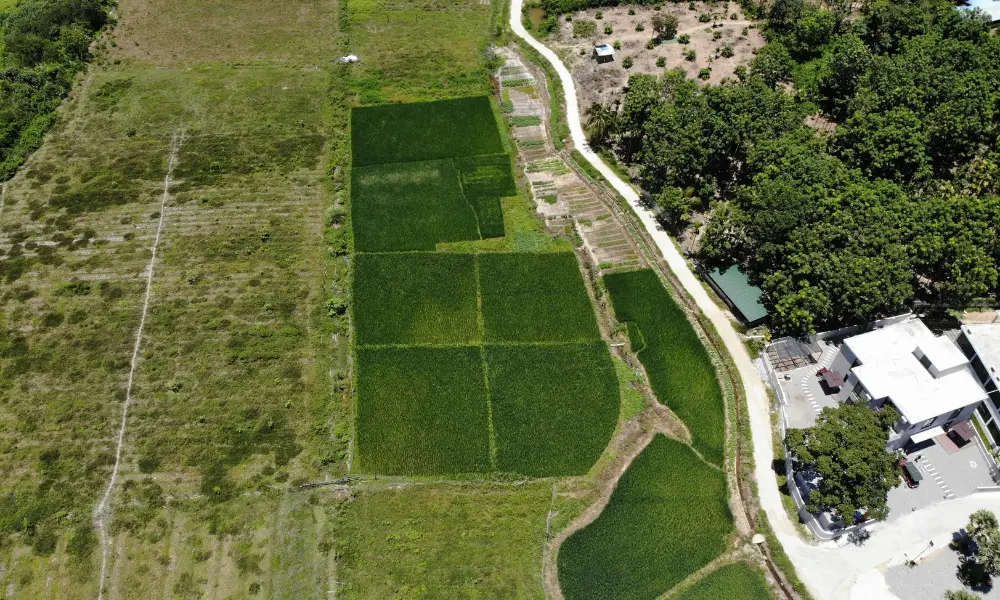
- Surveying of parcels to create cadastral maps.
- Adjudication of claims, public display of records for objections, and issuance of Adjudication Certificates leading to formal titles.
SLR is particularly helpful for individuals in open, undisturbed, and undisputed possession for 12 years or more. It often reduces individual costs and effort since the NLA drives the process in designated communities. Check the NLA website or contact them to see if your area is (or will be) included. If not, use the standard First Registration route.
Practical Tips for Success
- Start with a survey — A pre-checked Plan Diagram is usually essential.
- Document thoroughly — Keep photos, tax receipts, witness details, and records of any improvements.
- Track your application — Use your instrument number and the NLA’s online tools (e.g., eLandjamaica for searches).
- Budget realistically — Expect costs for surveys, professional fees, advertisements, and NLA registration fees (use the NLA’s online fee calculator for estimates).
- Overseas applicants — Appoint a local attorney or representative via Power of Attorney.
- Timeline — First registration can take several months to over a year, depending on complexity and any objections.
After You Receive Your Title
Store the original Certificate of Title safely and keep the duplicate secure. Update any changes (e.g., transmissions on death) promptly.
Important Disclaimer
This post is for general information and educational purposes only. It is not legal advice. Jamaican land laws and NLA processes can change. For your specific situation, consult a licensed Jamaican attorney-at-law and contact the National Land Agency directly (asknla@nla.gov.jm or their offices). Always verify the latest requirements and fees on the official website:www.nla.gov.jm.